
Project Management
Throughout my studies and projects, I’ve consistently taken on the role of facilitator and planner. I naturally gravitate toward seeing things from a higher perspective, connecting the pieces of the puzzle. It’s enjoyable, gives me clarity, and motivates me to consider how my actions impact the team. By planning ahead while embracing agility, I not only guide the project but also become a stronger, more supportive team member.
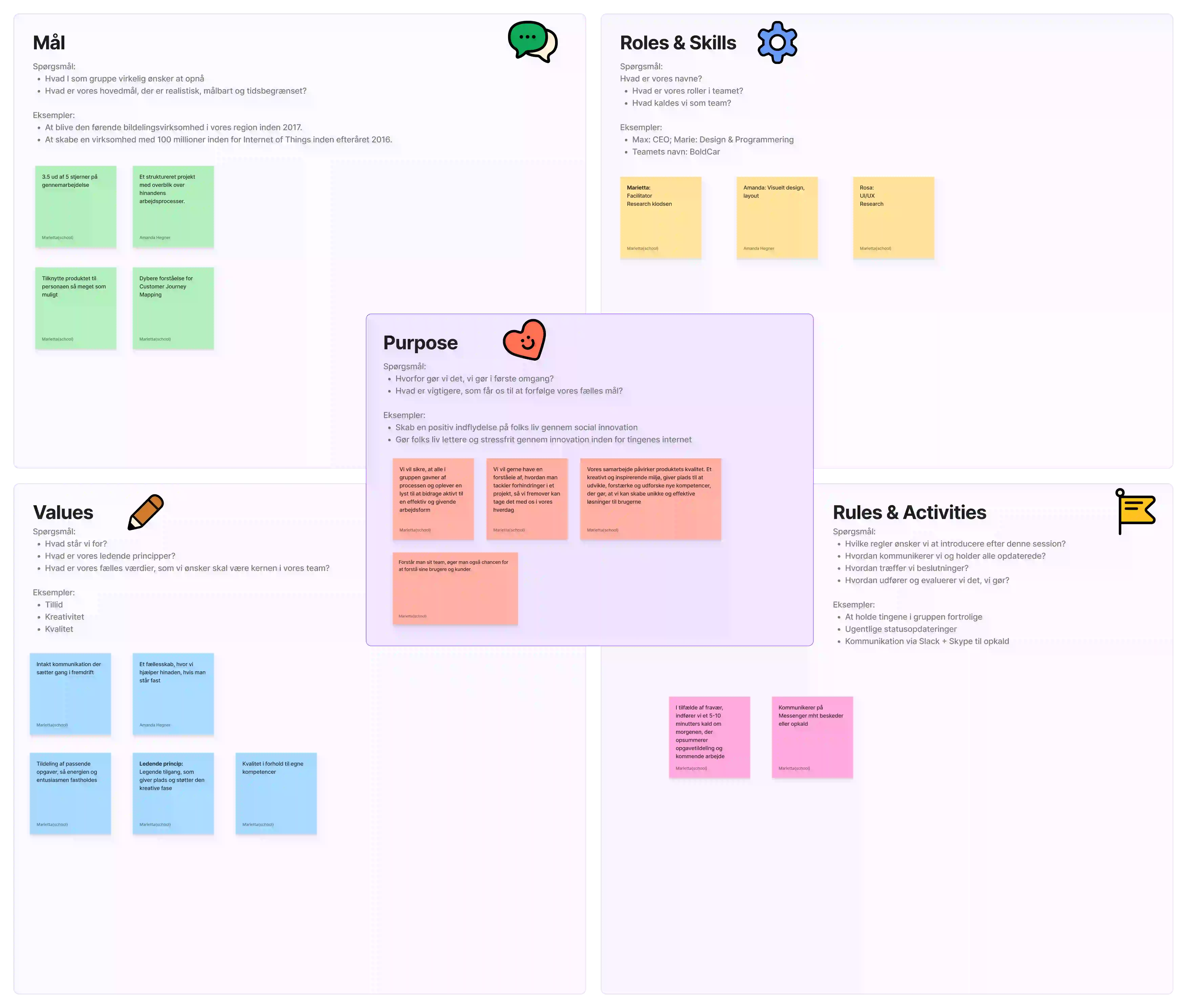
Team Canvas
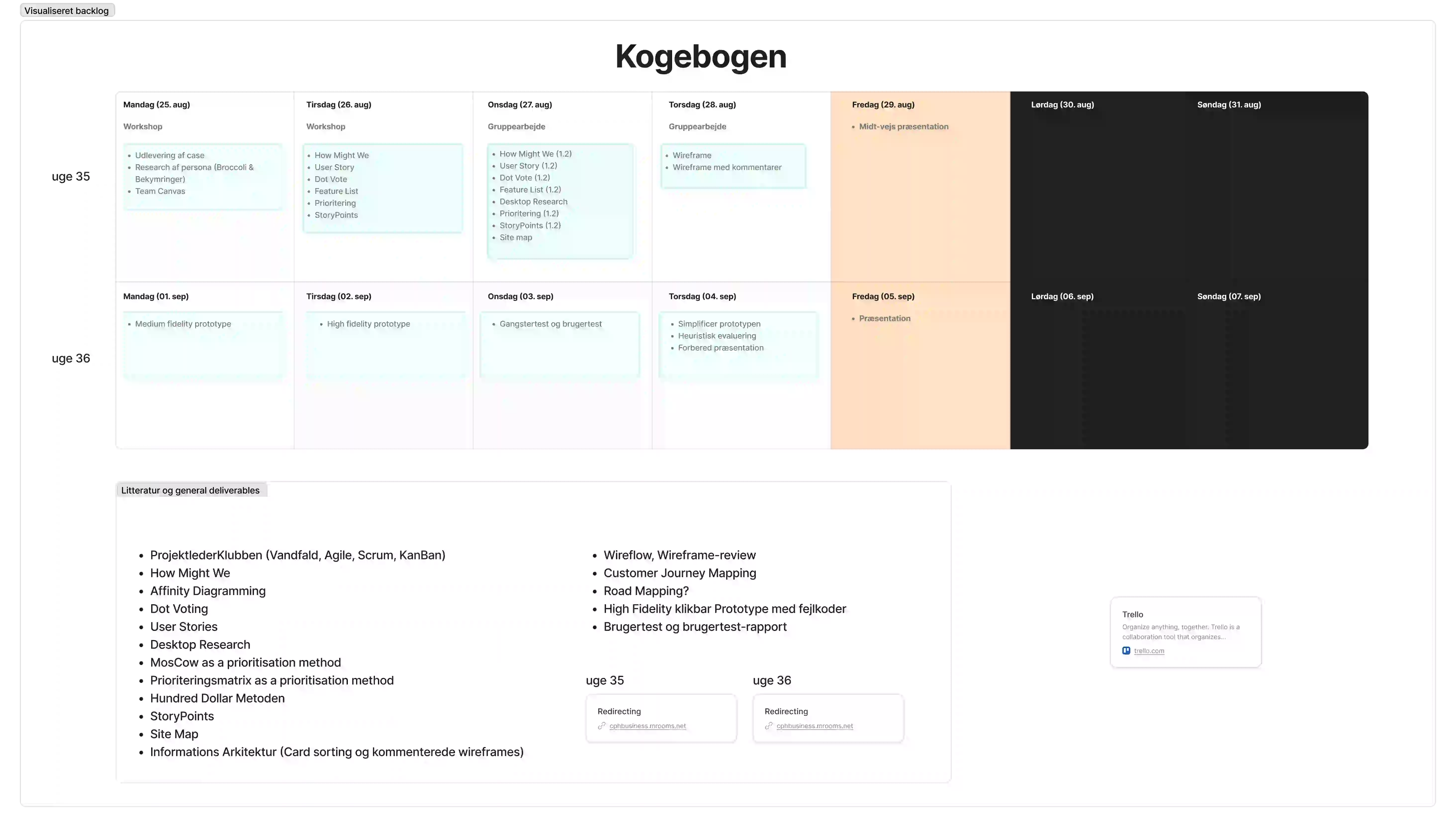
Visualised Backlog
Team Canvas
We started projects by using a Team Canvas to align expectations, goals, and values for both the team and the project. It sparked meaningful conversations, helped us get to know each other, whether familiar or new teammates, and served as a reference point throughout the project to maintain clarity, connection, and team cohesion.
Visualised Backlog
I enjoy exploring visual ways to map tasks in Figma. For projects, I created a simple calendar-inspired visual backlog, showing daily expectations as a reference point. It provided structure, reduced overwhelm, and still allowed flexibility and agility throughout the project.
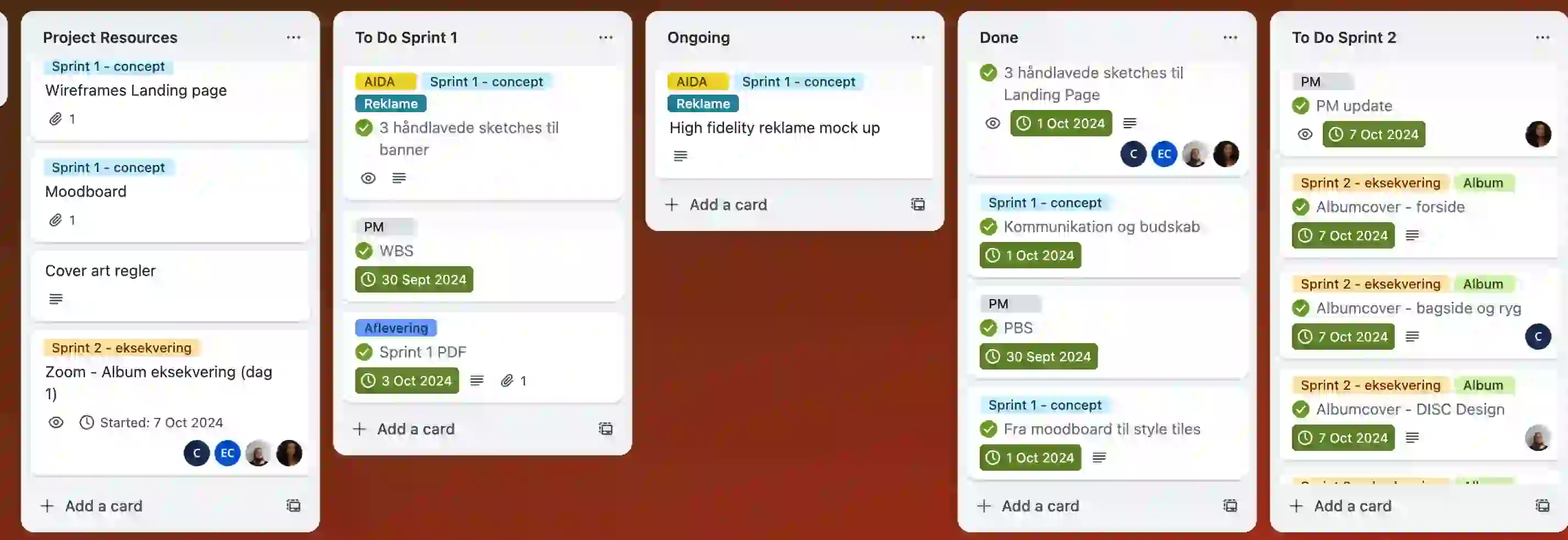
Trello
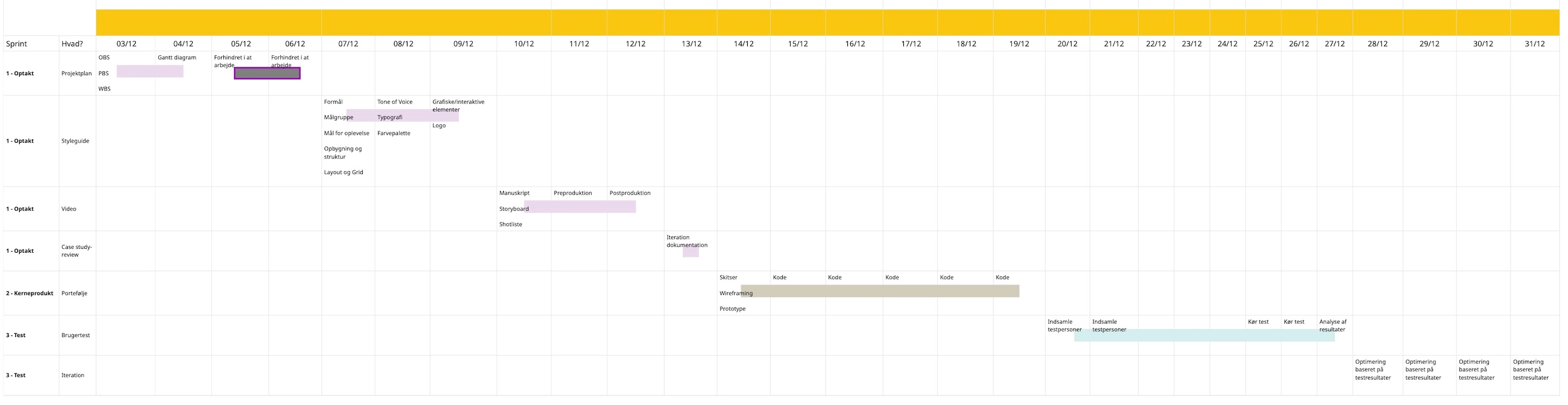
Gantt Chart
Trello
Trello became essential during active project days, especially with a four-person team. I created labels, divided work into three sprints, and assigned specific tasks with notifications. Trello worked best for well-defined tasks, while broader tasks required balancing between the backlog and the Kanban board to maintain clarity and progress.
Gantt Chart
For longer projects, we used Gantt charts as a hybrid between a visualized backlog and a Kanban board. Tasks, often broader in scope, were mapped out, assigned to each team member, and scheduled with timing and duration. I typically created these charts myself in FigJam to give the team a clear overview of who was doing what, when, and for how long. Always with space for agility.