
Students Digital Social Platform
How can we design a social media platform for Erhvervsakademi København that strengthens learning and community while supporting sustainability, inclusion, and ethical UX?
For this school project, we developed a Figma prototype of the new social media platform, created to unite students following the merge of KEA and Cphbusiness Academy. Focusing on social spaces, we created personas, defined user stories, and prioritized features using story points. Three key pages were selected for development in HTML/CSS/JS, designed to enhance engagement, accessibility, and collaboration, while integrating sustainable practices and ethical design.
PRIMARY ROLE
Facilitator
Research/testing
Frontend
DELIVERIES
Website
TOOLS/METHODS
Figma
Qualitative Interviews
Personas
TEAM
3 Designers
TIME
3 Weeks
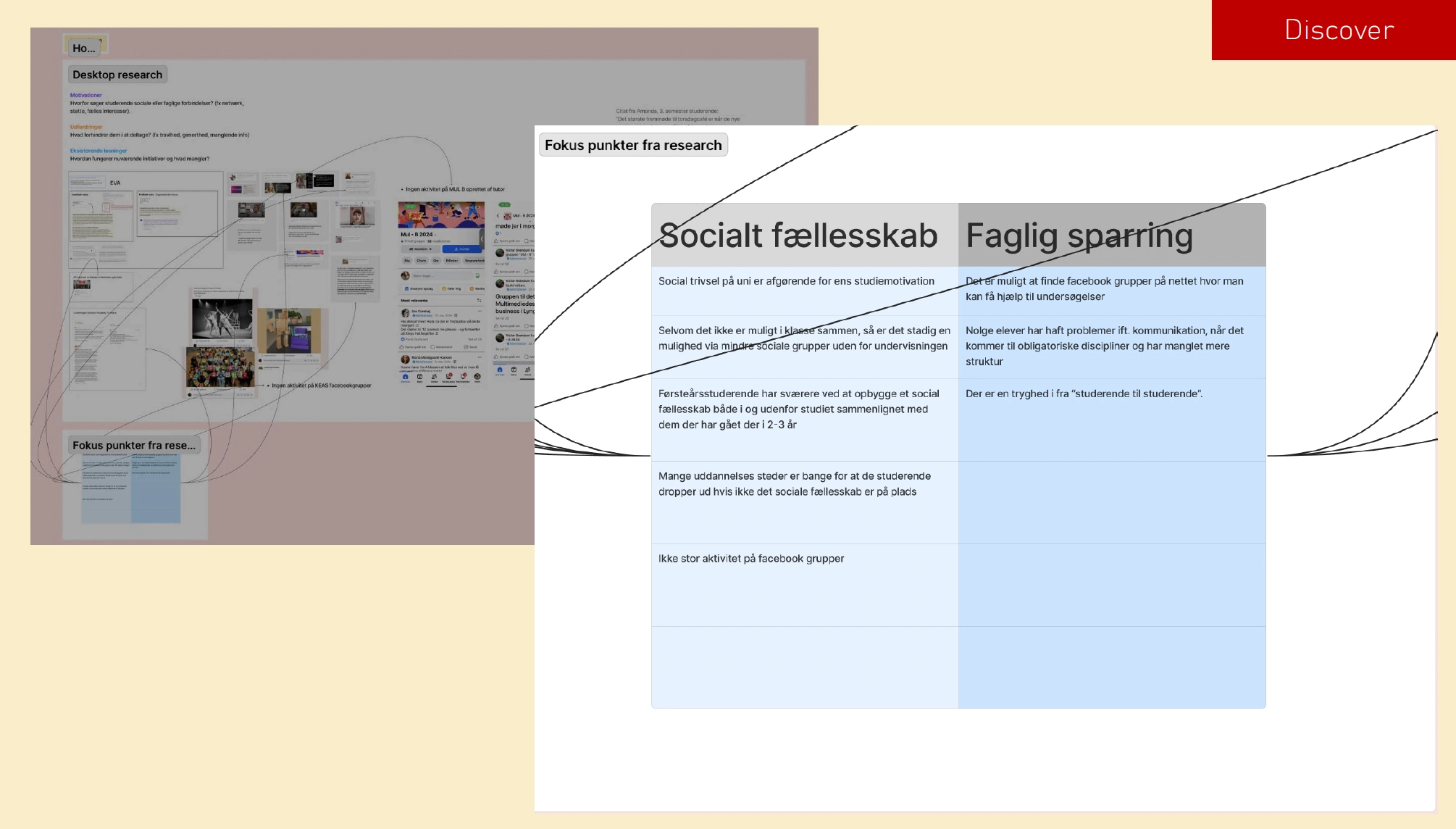
Desktop Research
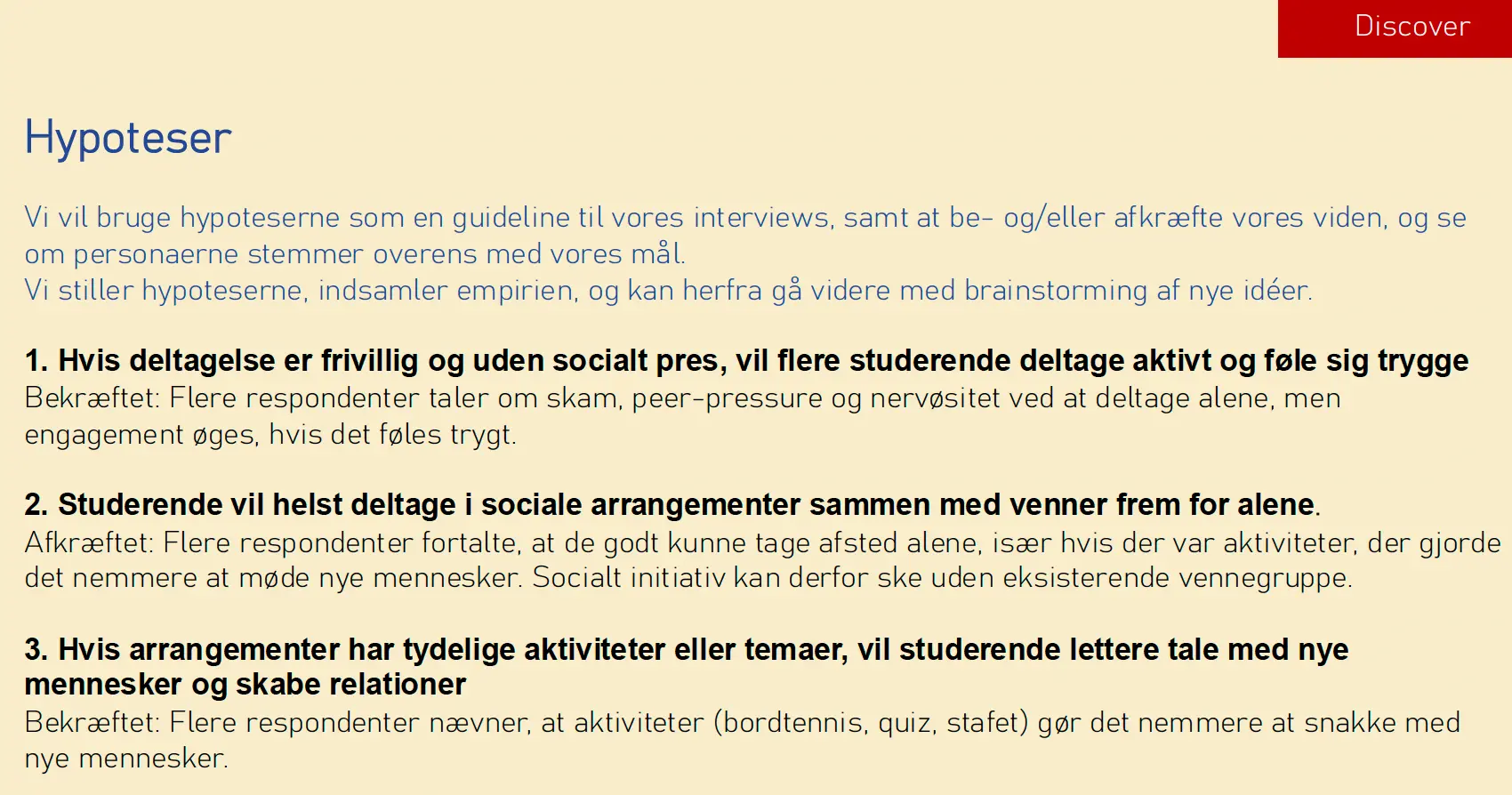
Three Hypotheses
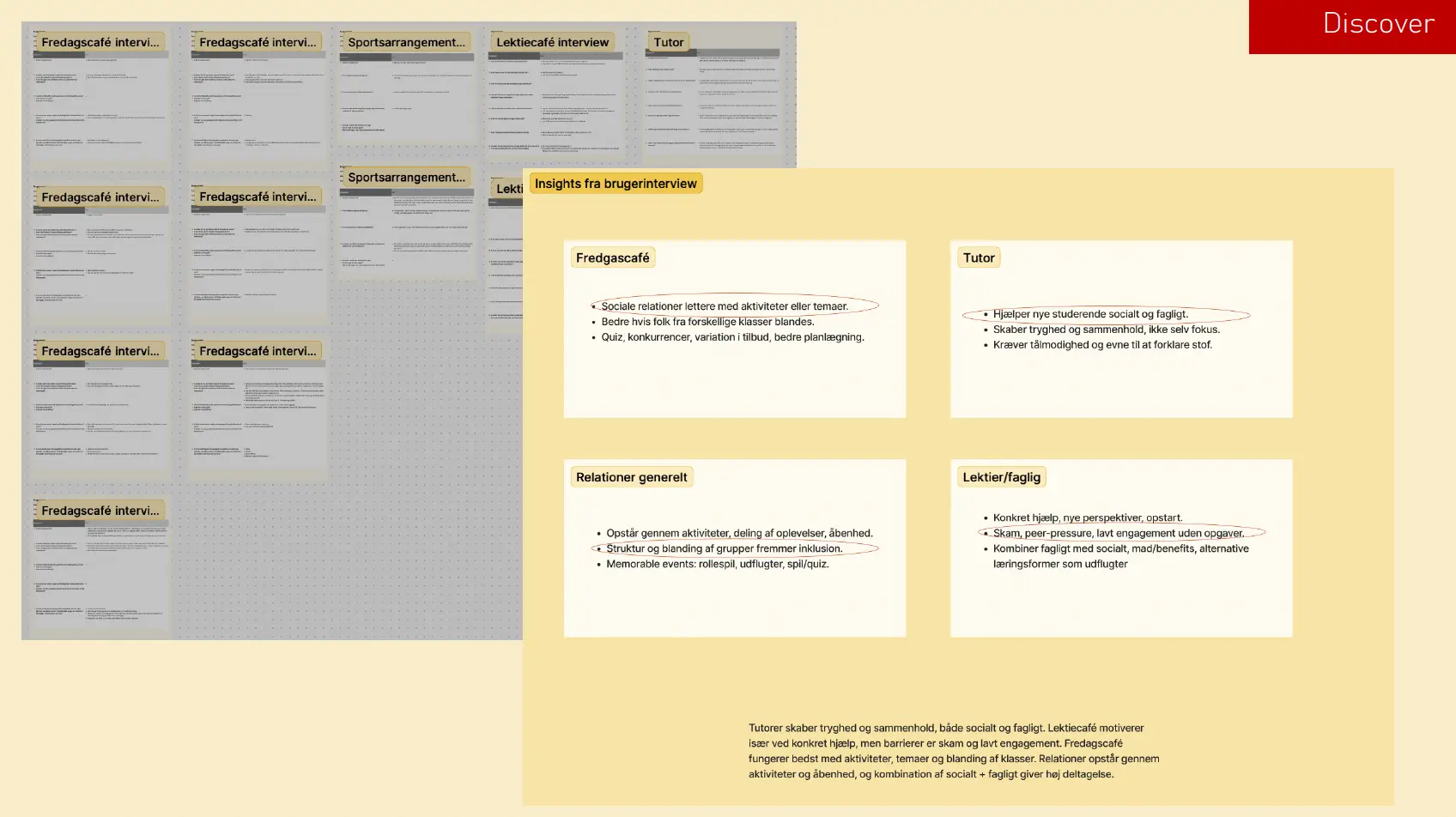
Interviews
Desktop Research
We began with desktop research to gather insights from students across Denmark about their general school experiences. From this, we identified two main themes (social community and academic exchanges) that guided the questions we later asked students at Cphbusiness Academy.
Hypotheses
Based on our desktop research, we formulated three hypotheses. We then planned qualitative interviews to confirm or challenge these hypotheses, aiming to gain clarity and guide us toward the brainstorming phase.
Qualitative Interviews
1) Voluntary activities without peer pressure make it easier to form new relationships and help participants feel safe.
2) Social initiatives can succeed even without an existing friend group if the activities are relevant, making it easier for students to connect with others.
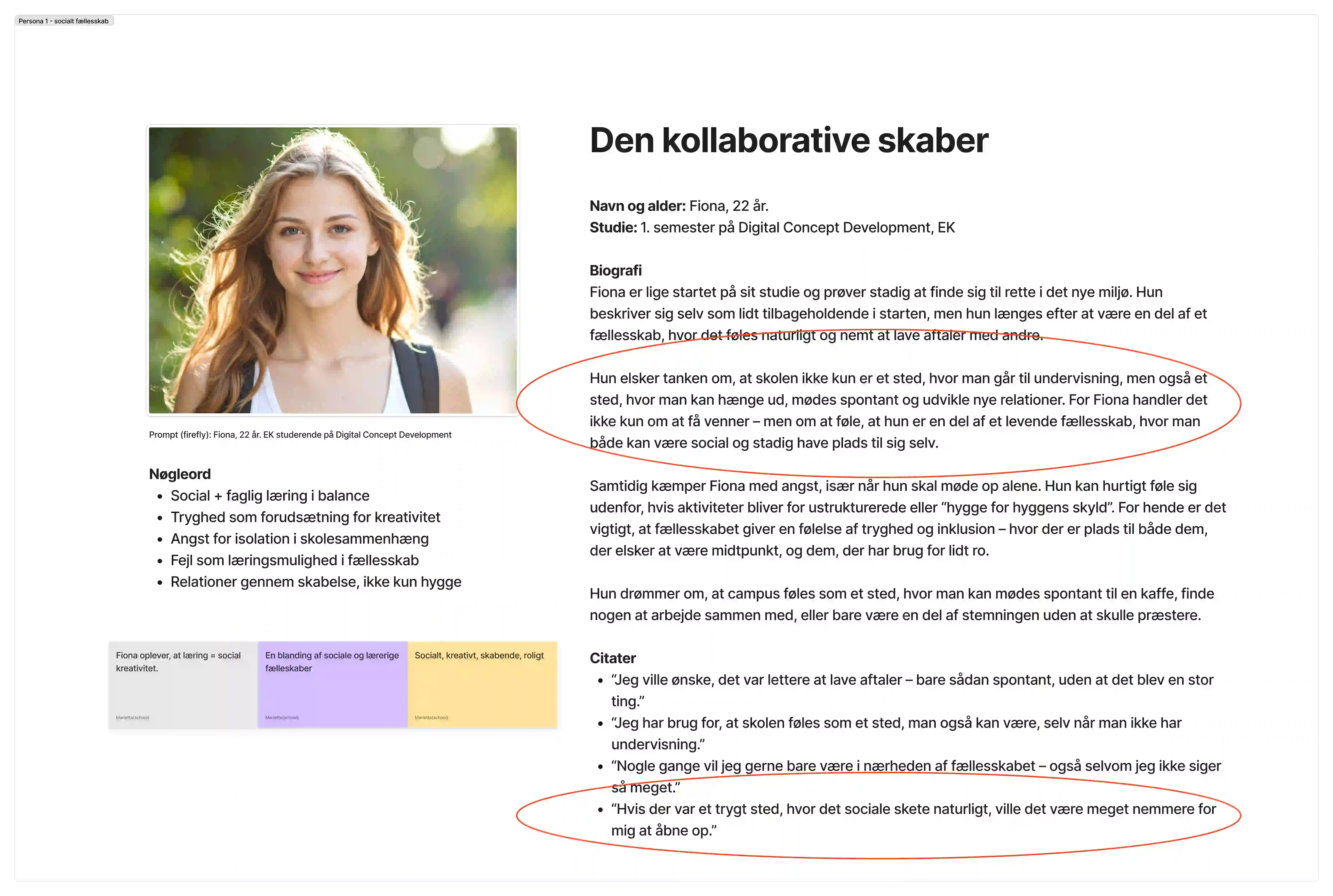
Fiona - Persona 1
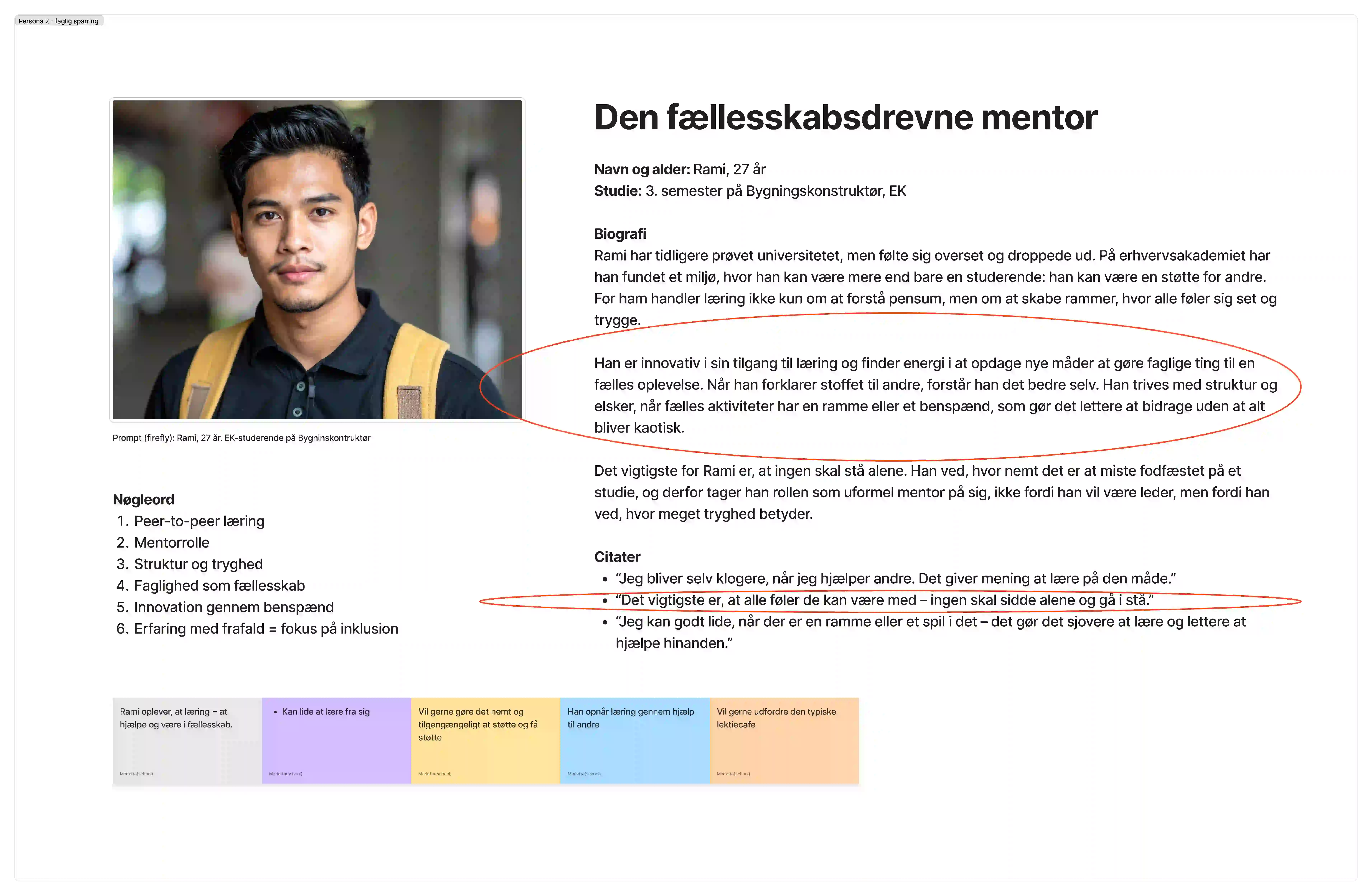
Rami - Persona 2
Persona 1
Fiona represents students with social anxiety and her persona helps us design activities and features that feel safe, approachable, and engaging. She opens up in safe environments, enjoys collaboration, and tends to act spontaneously.
Persona 2
Rami represents students who enjoy mentoring and combining social interaction with learning. He deepens his understanding by sharing and teaching, and prioritizes making activities accessible so no one feels left out.
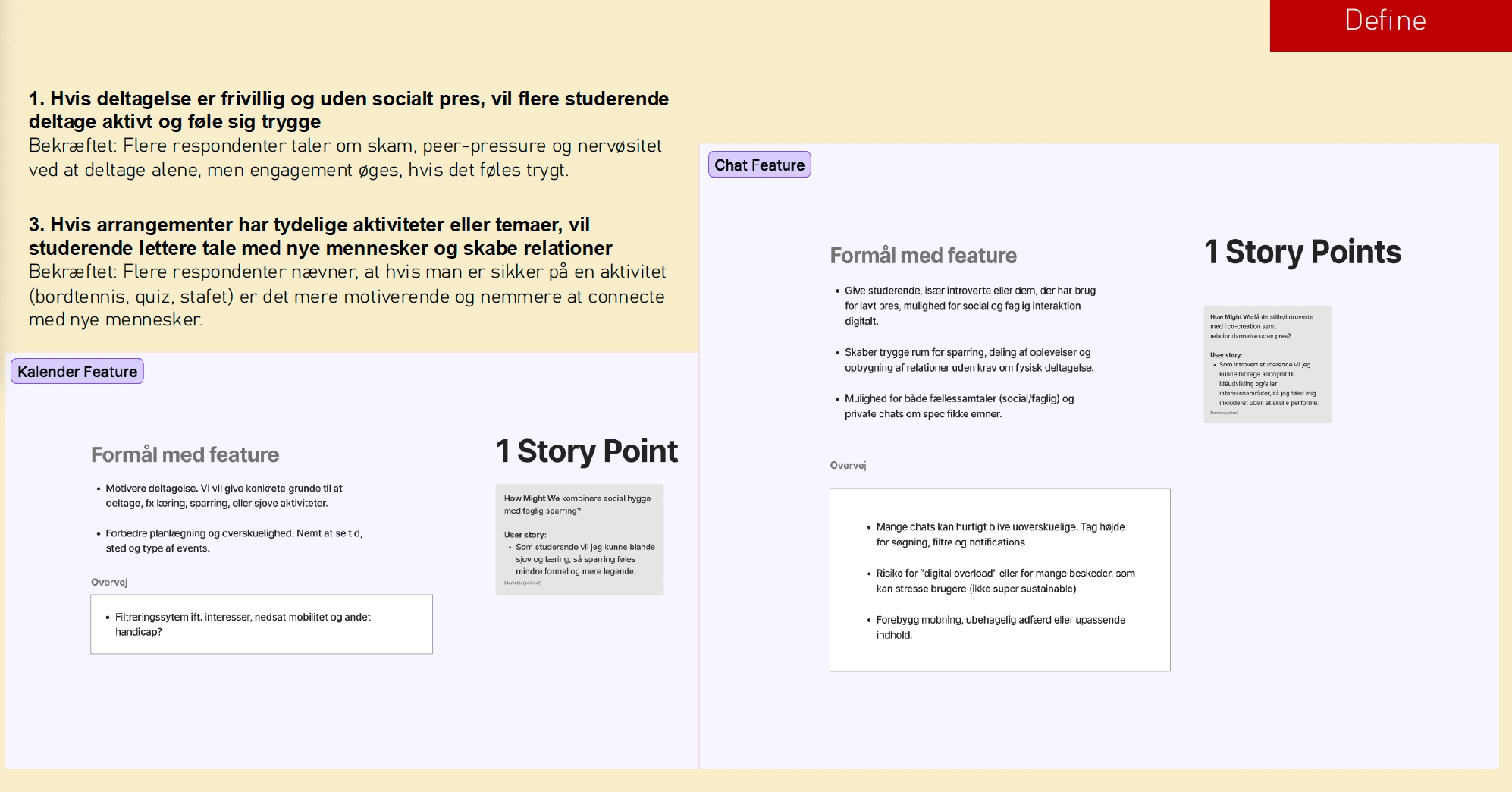
Chat + Calendar
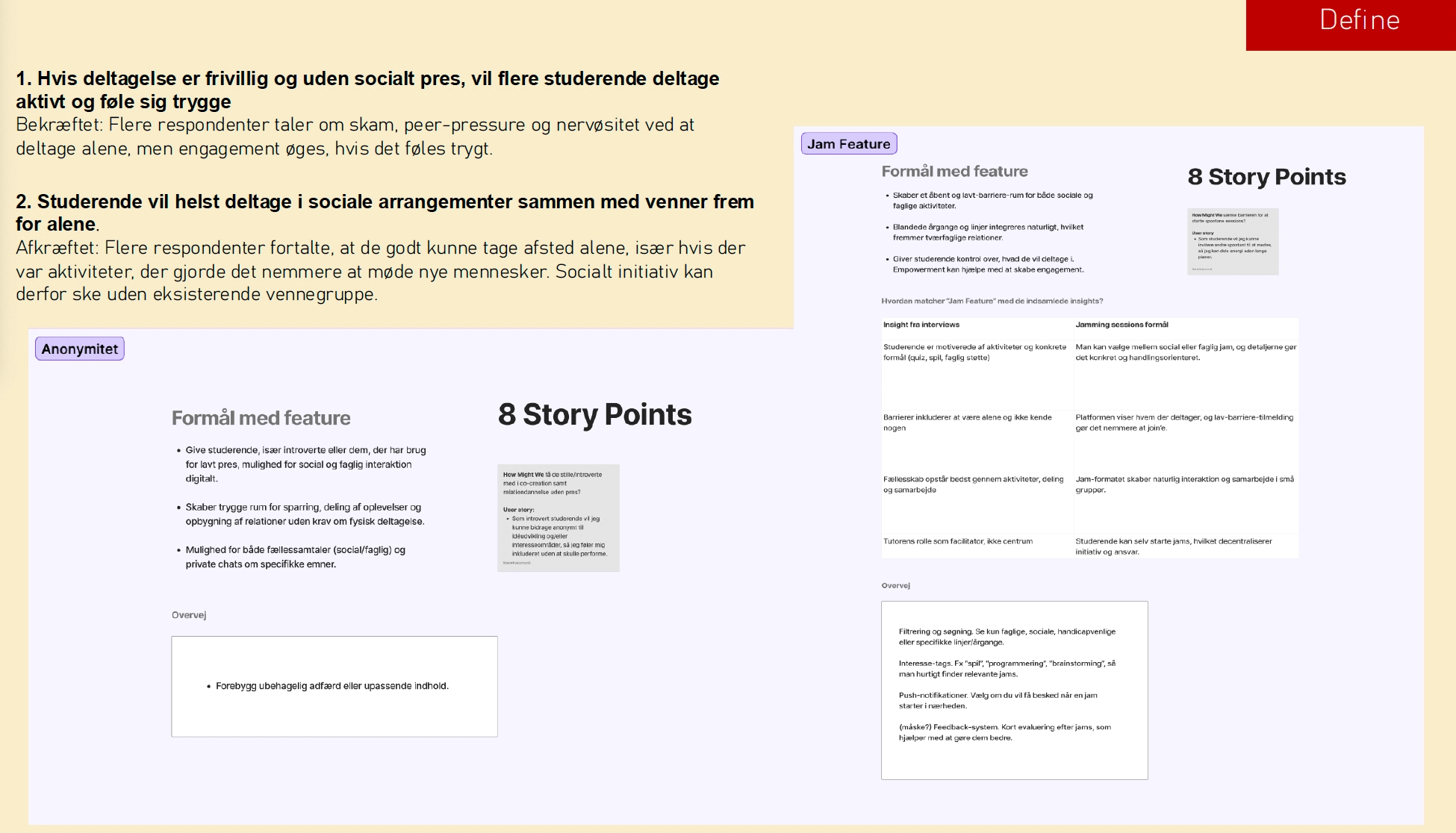
Jam + Anonymous
Low-cost Features
After defining HMW questions and user stories, we allocated 20 story points. Two low-cost features, Chat and Calendar, were prioritized. The Chat feature helps students find common activities and centralizes all conversations in one place. The Calendar gathers all school activities, catering to more structured students who prefer planning ahead.
High-cost Features
The two higher-cost features, 8 story points each, were Jam and Anonymous. The Jam feature encourages spontaneity by letting students quickly create activities, catering to those who value flexibility. The Anonymous feature allows users to hide their name and picture, enabling participation without pressure or visibility.
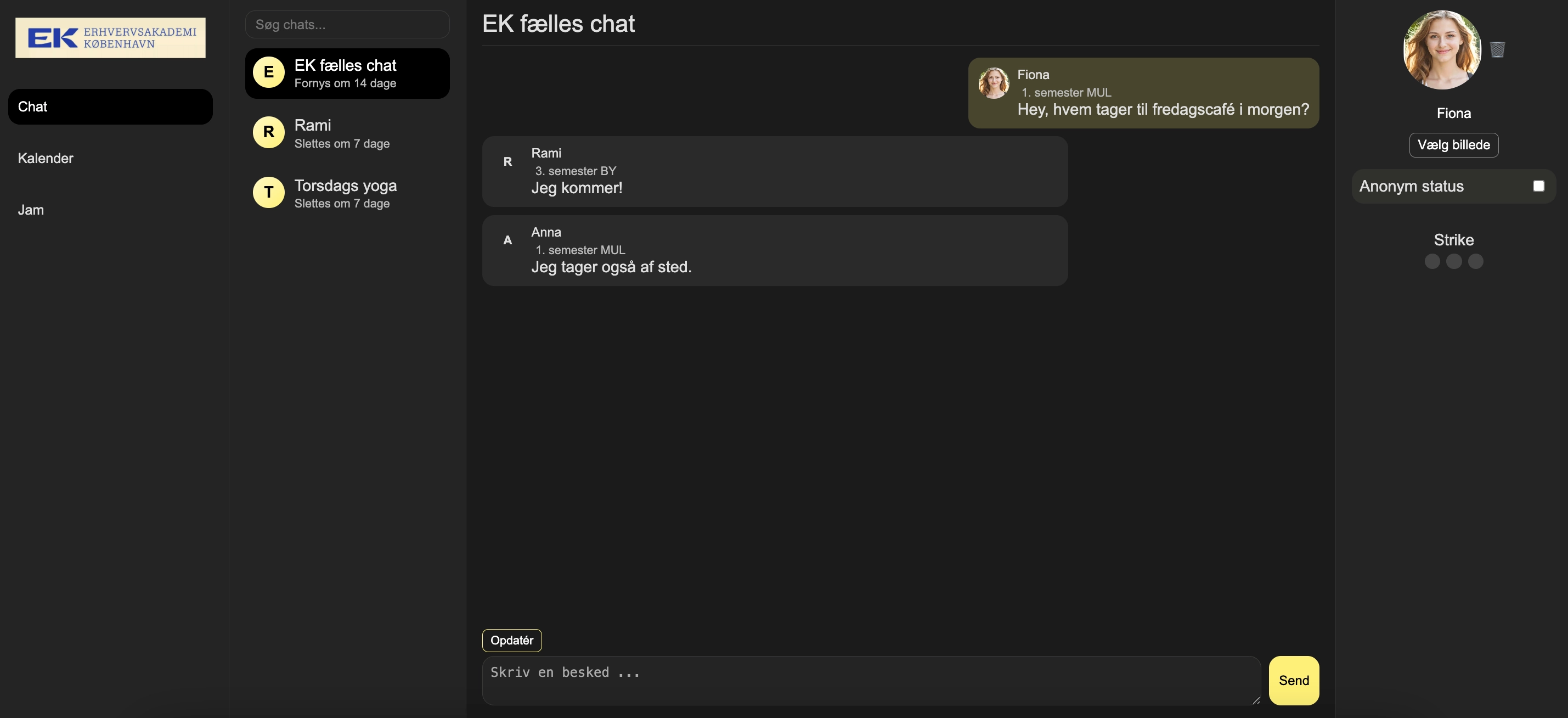
Feature 1: Chat
A single school-wide chat where students can discover shared interests and create new group chats with peers who share those interests.
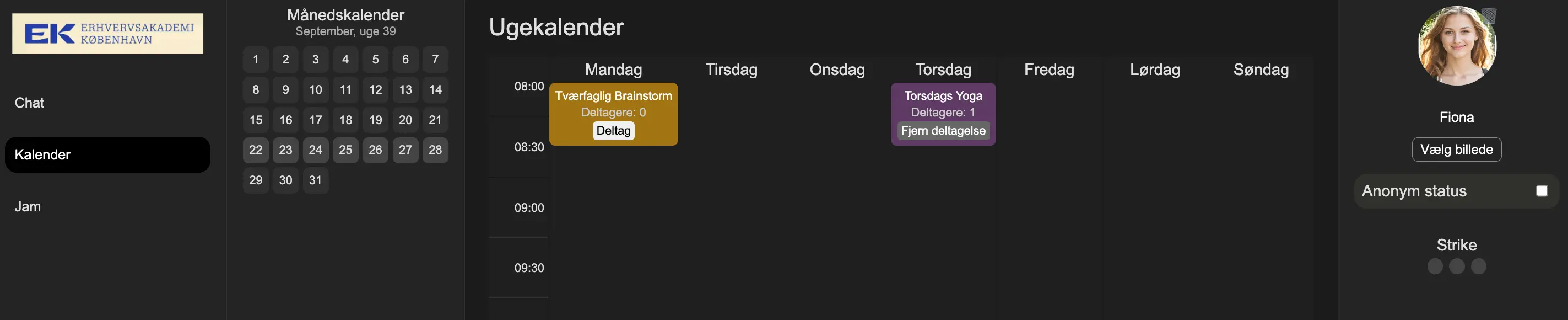
Feature 2: Calendar
A centralized calendar showing all school activities throughout the month, helping structured students plan ahead and participate more easily.
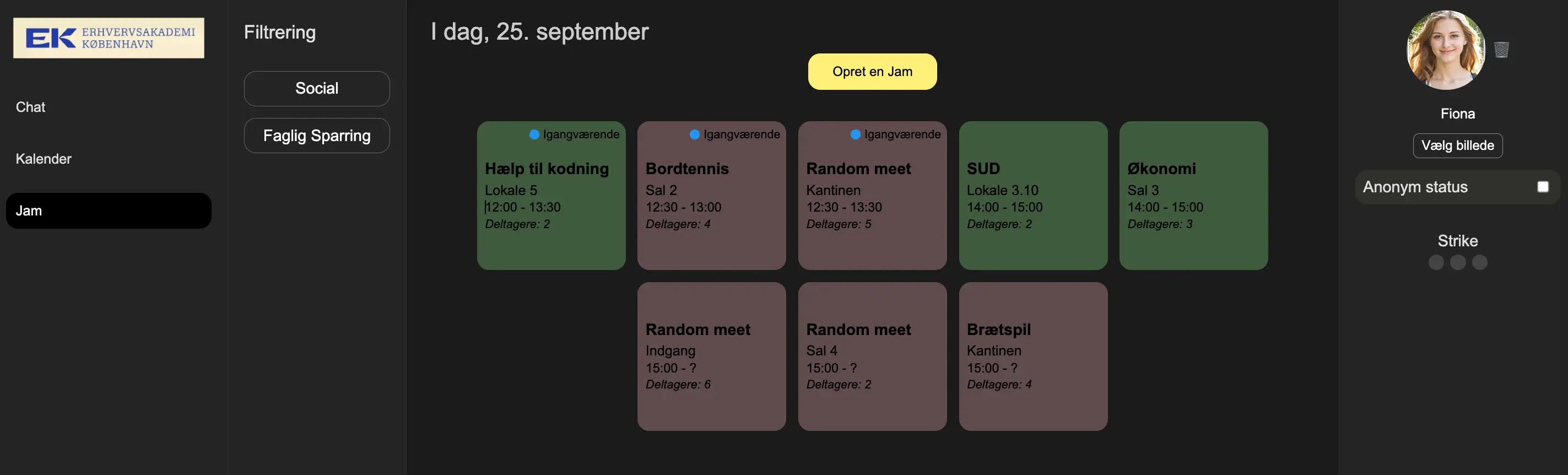
Feature 3: Jam
For students craving spontaneous meetups or new connections, Jam lets them quickly create an activity by adding time, location, and a brief description.
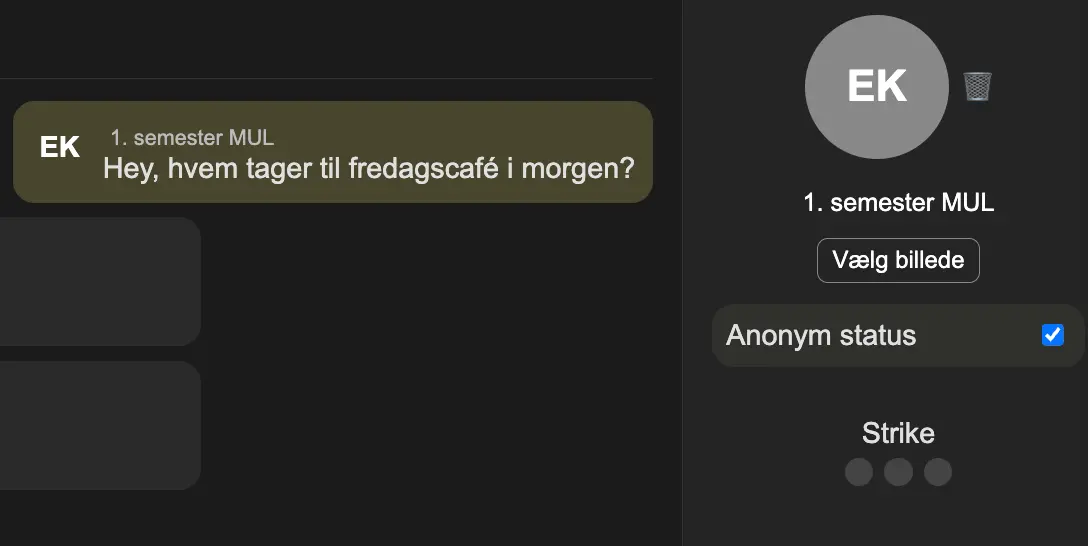
Feature 4: Anonymous
For students who feel anxious, shy, or pressured in social settings, Anonymous Mode provides a safe way to participate. By clicking the Anonymous button in the always-visible right menu panel, users can hide their name and profile picture with only their semester is shown.
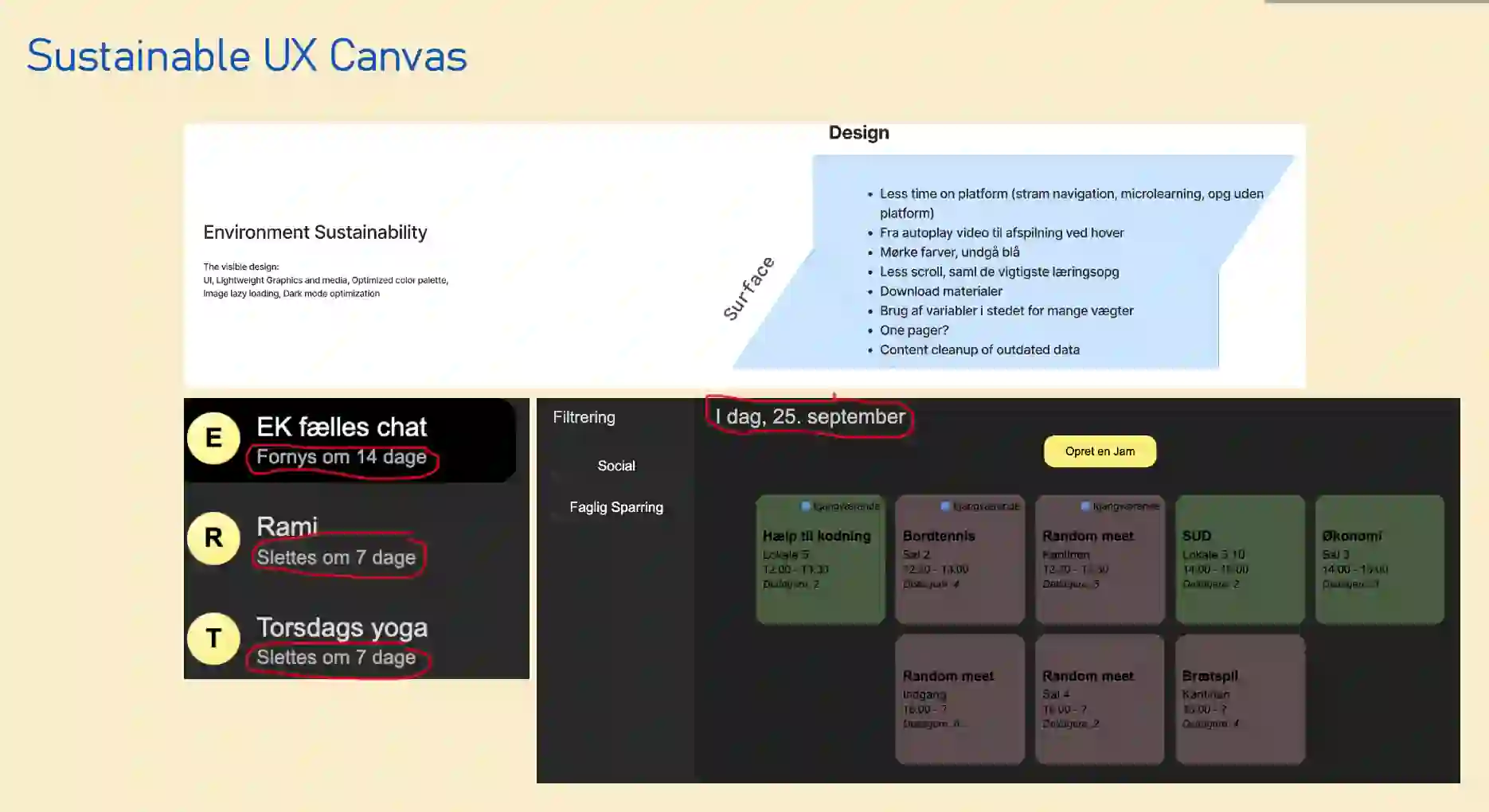
Design (Surface)
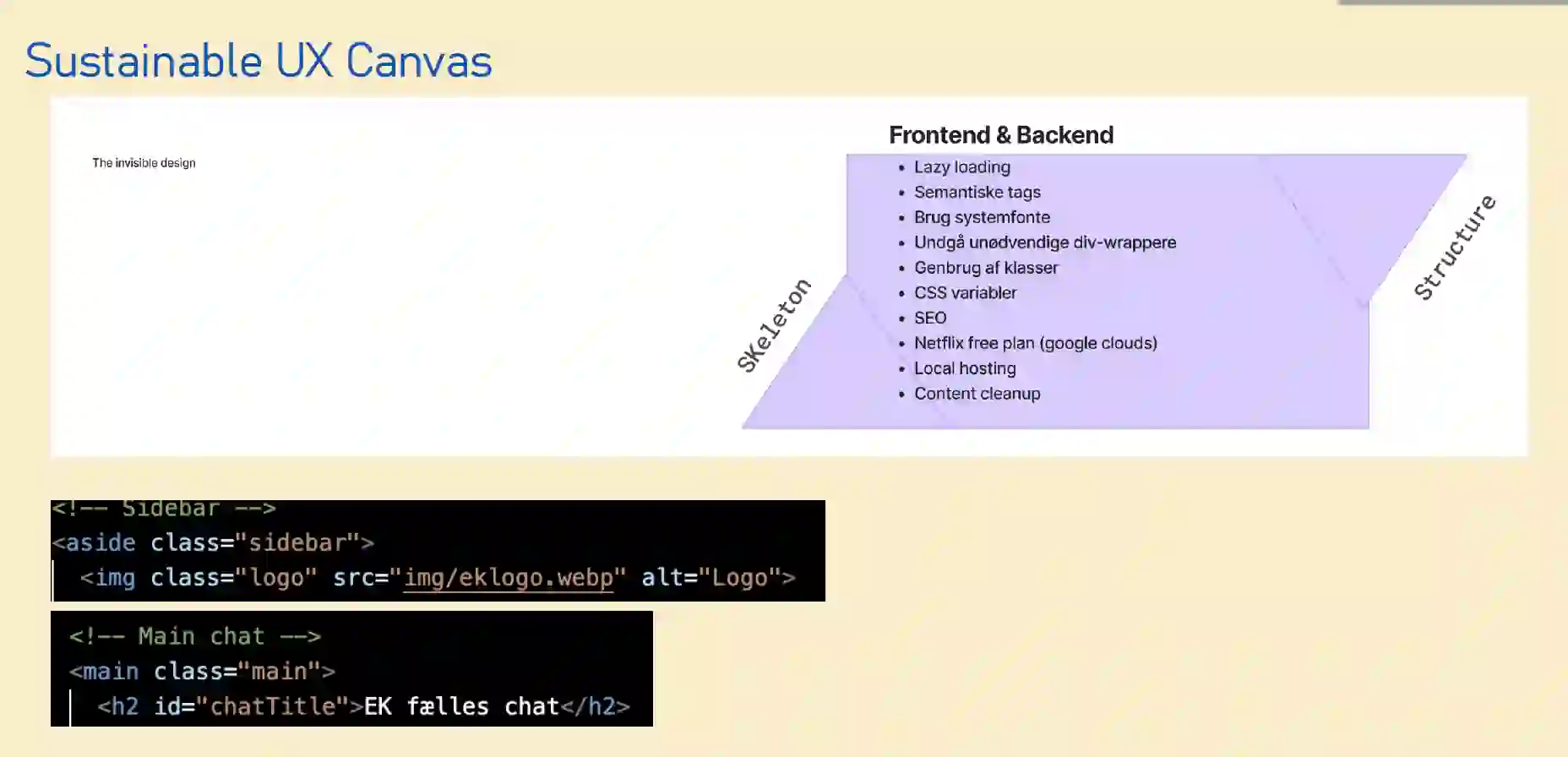
Frontend (Skeleton)
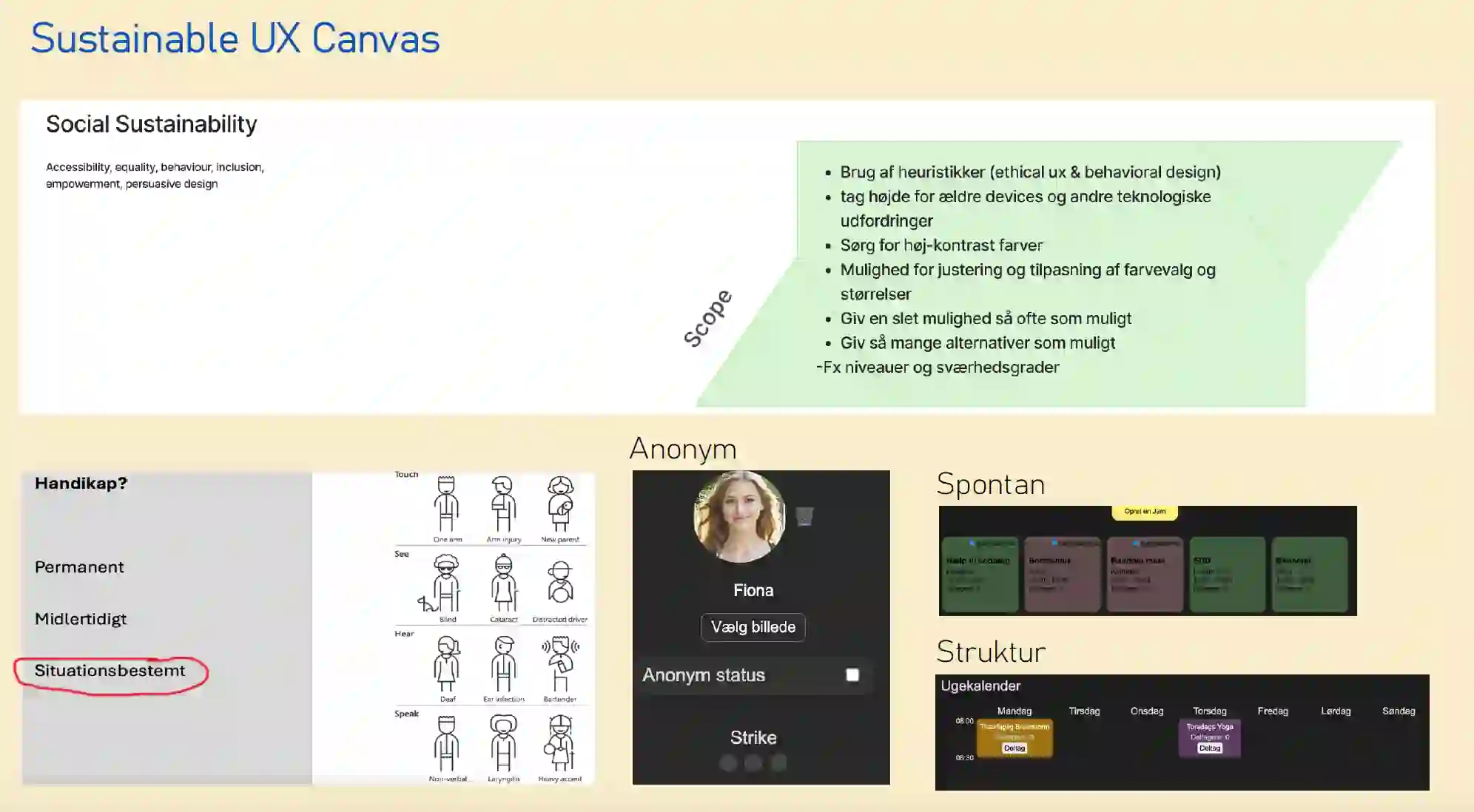
Social Sustainability (Scope)
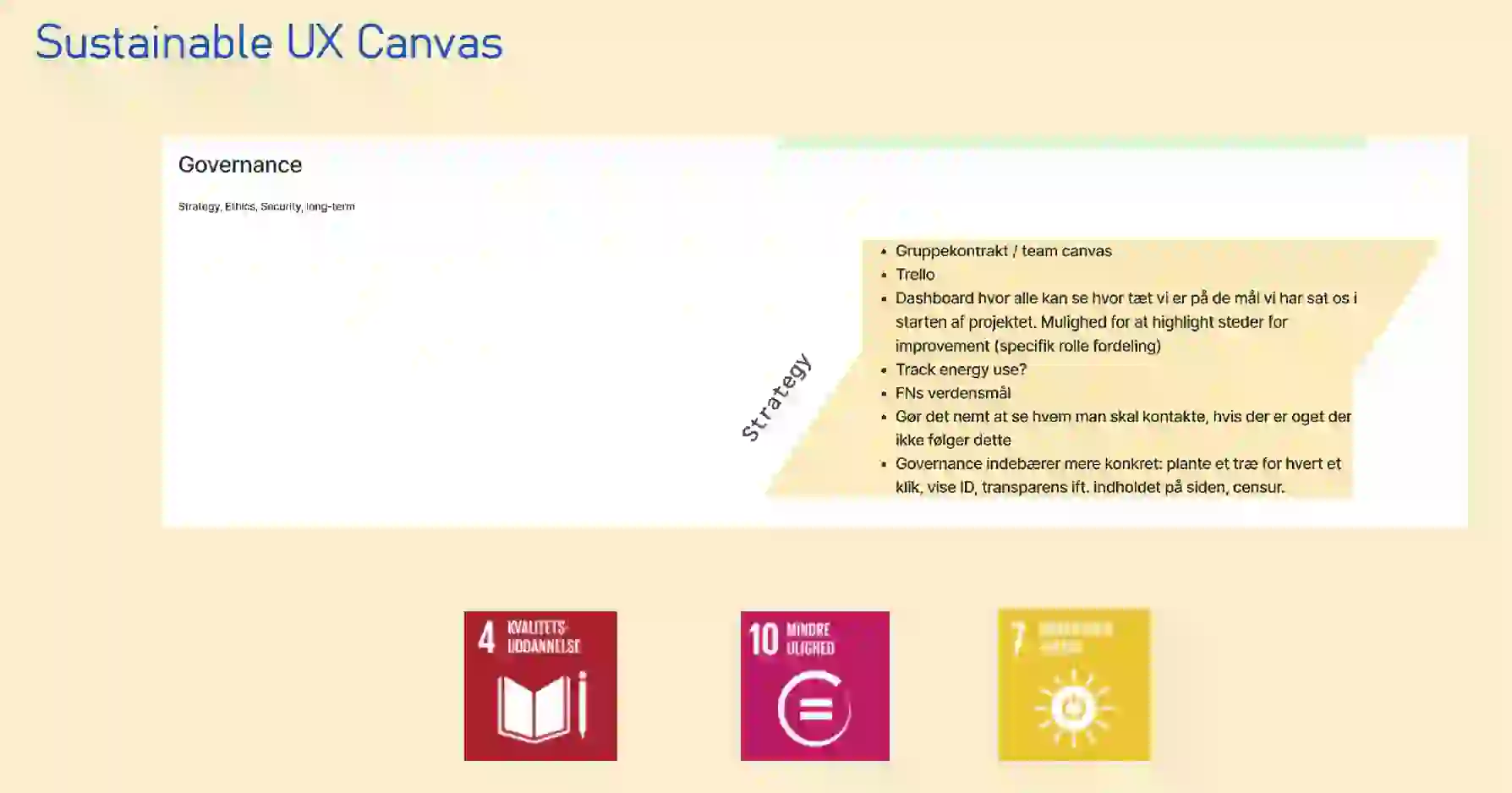
Governance (Strategy)
Design
To minimize energy use, the platform uses dark mode, automatically deletes chats every 7 days, and limits Jams to the current day. This reduces data load and ensures automatic clean-up.
Frontend
The frontend uses minified code, WebP image formats, and semantic HTML tags to improve performance, accessibility, and maintainability.
Social Sustainability
The platform supports situational needs, allowing students to participate anonymously, spontaneously, or in a structured way, accommodating different accessibility and comfort levels.
Governance
UN SDGs Alignment. Enables learning, equal participation, and energy-efficient design.